
Why Maasai Mara Is the Safari You’ve Been Dreaming Of
Having visited Amboseli National Park first, there is an immediate difference in the look and feel of Maasai Mara. Neither is better than the other—they’re just different. The Maasai Mara has wide skies and endless plains, and when you go at the right time, the dry season, the animals are out and in plain view.
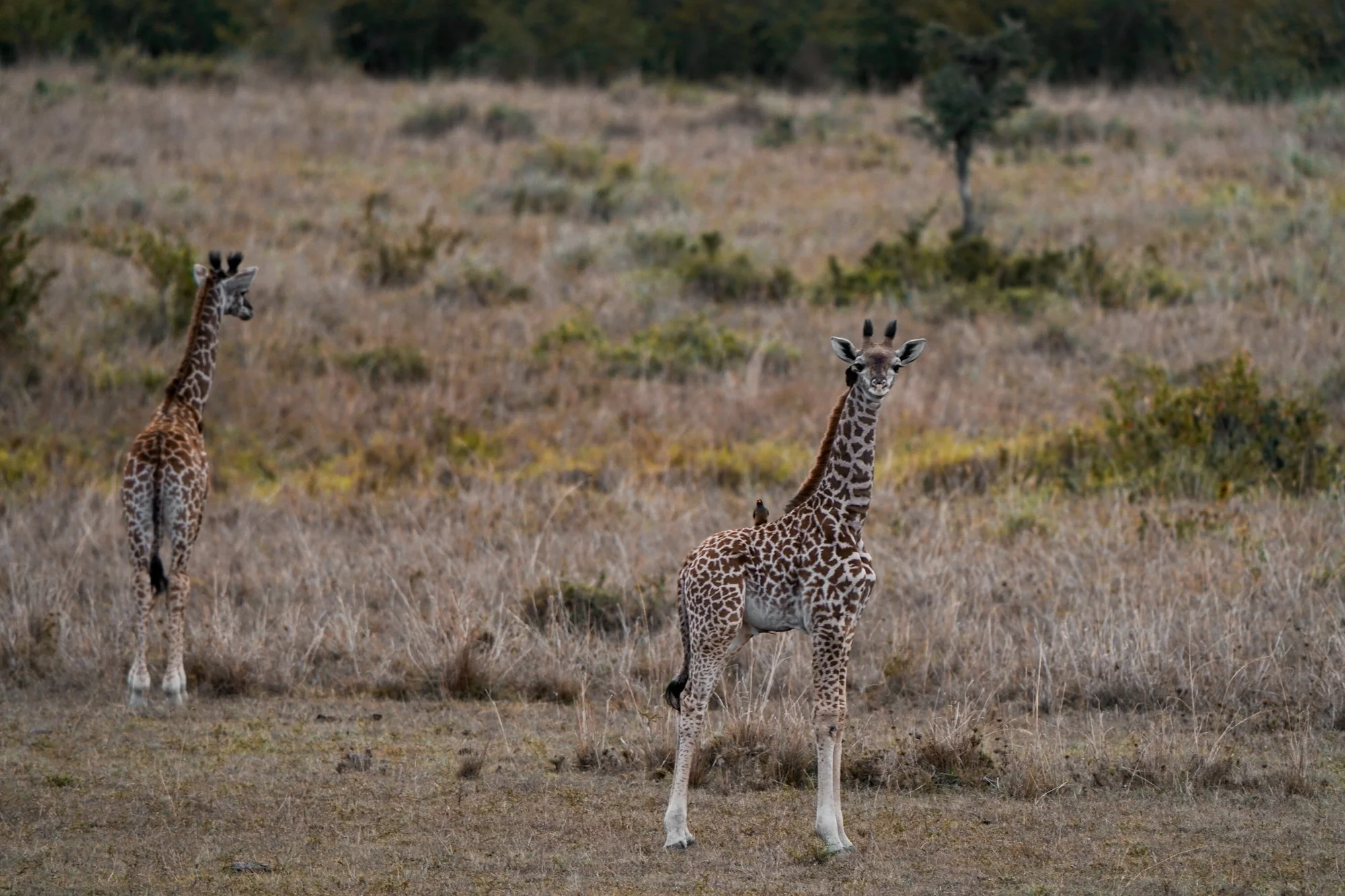
When you visit during dry season, the babies are everywhere. Baby giraffes crossing the plains in pairs. Baby zebras practicing their sprints. Lion cubs hidden not far from mom and aunties. Quads of warthog babies roughhousing and falling behind mom. I got to witness the sweetest side of the wild.
What really sets the Maasai Mara apart is the sheer variety of wildlife. Some animals overlap with Amboseli, but Maasai Mara has its own energy and a roster of species that makes it one of the most iconic safari destinations in the world.
The Wildlife I Saw
East African Cheetah
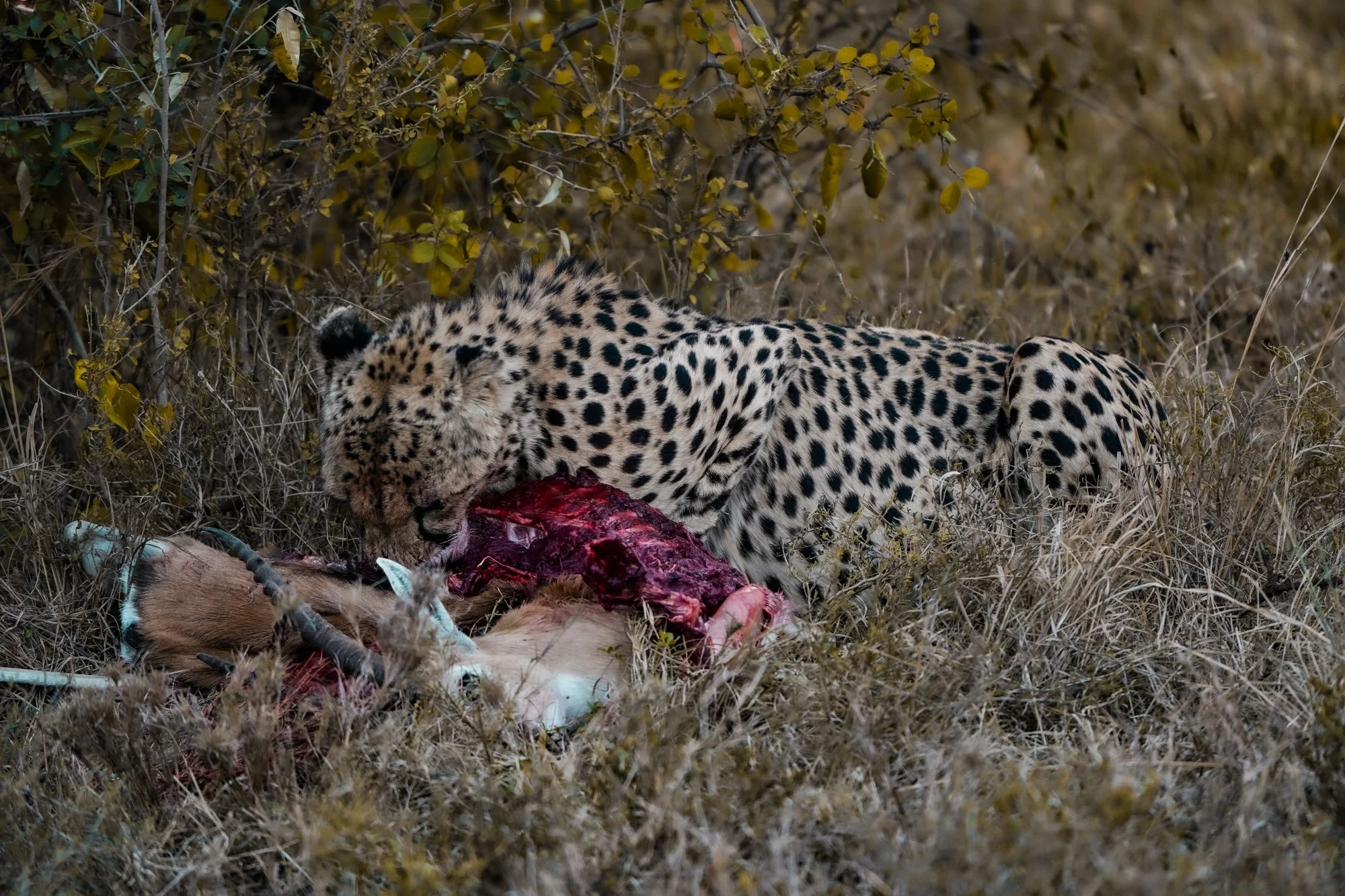
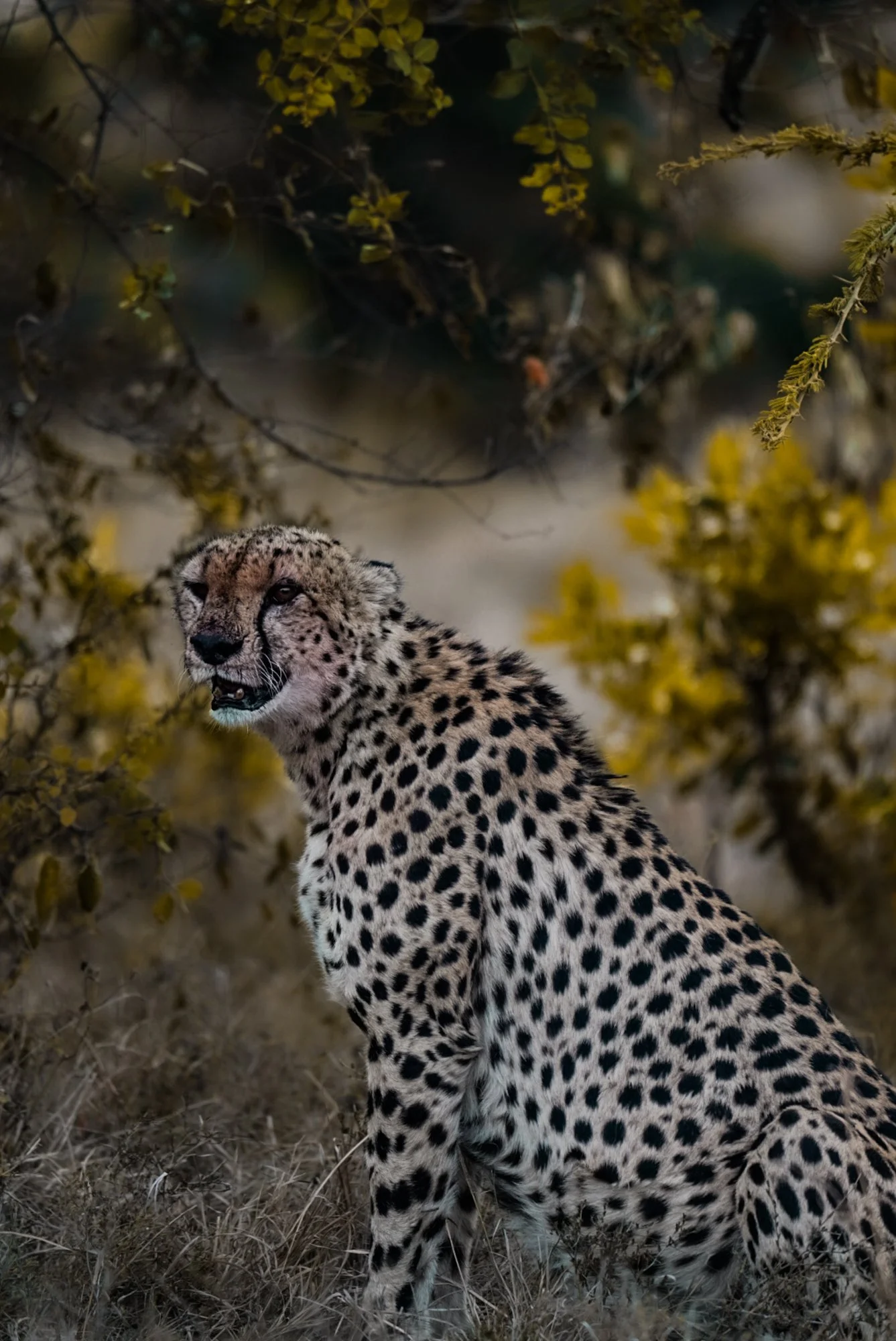
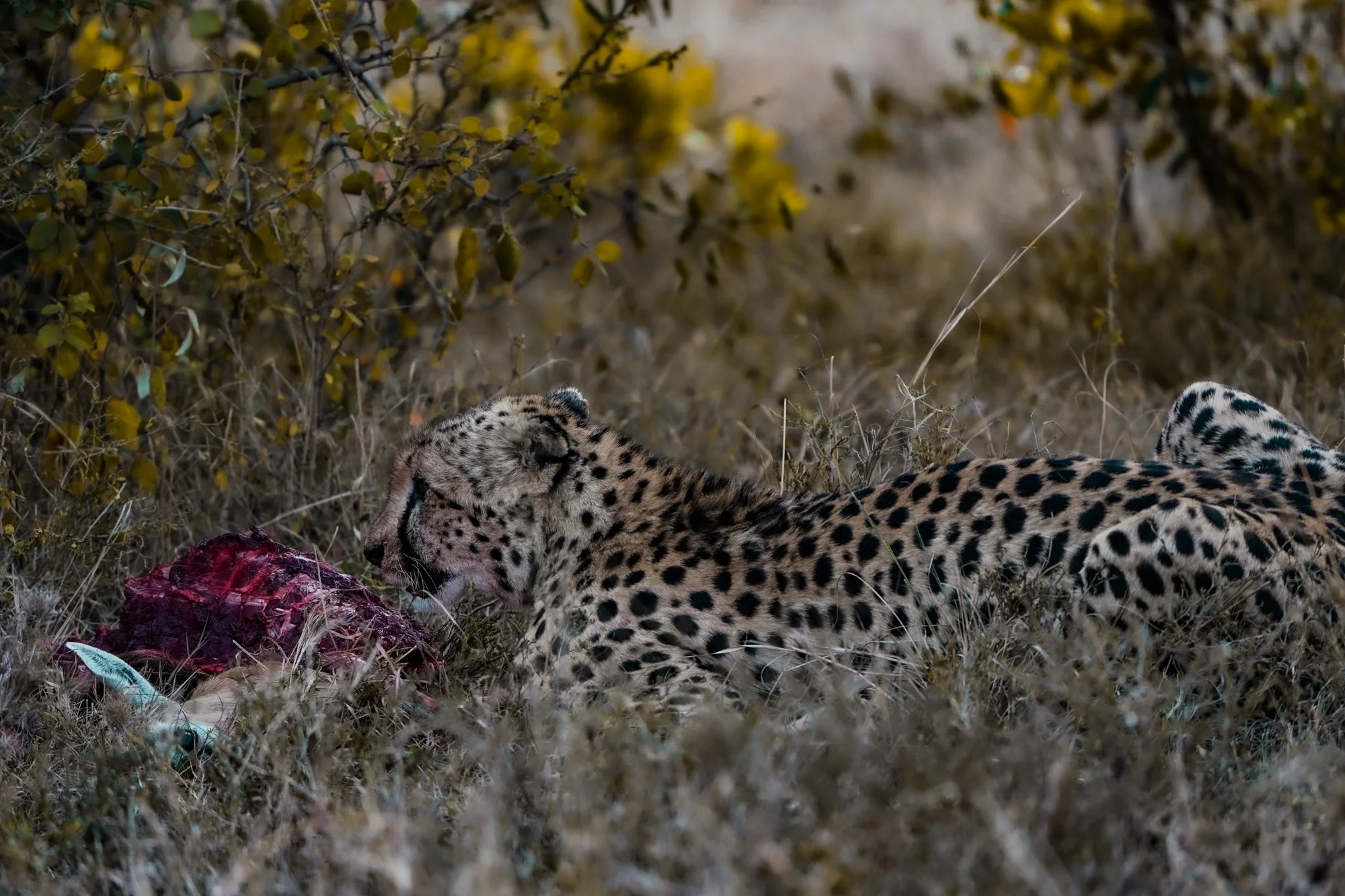
The most striking moment we came across in Maasai Mara seemed like it was straight out of the nature documentaries I watch: a cheetah with a fresh kill. We learned that cheetahs are the only big cats that eat their kill fresh, and they do not revisit a kill once they’ve finished eating it. Hunting at 70 miles per hour, they’re confident in their ability to catch something else fresh whenever hunger arises again. This moment was so raw and powerful that we watched in complete silence for about twenty minutes. Apparently, not everyone on safari gets to see a cheetah, so I felt quite lucky to have experienced this and captured the moment so well.
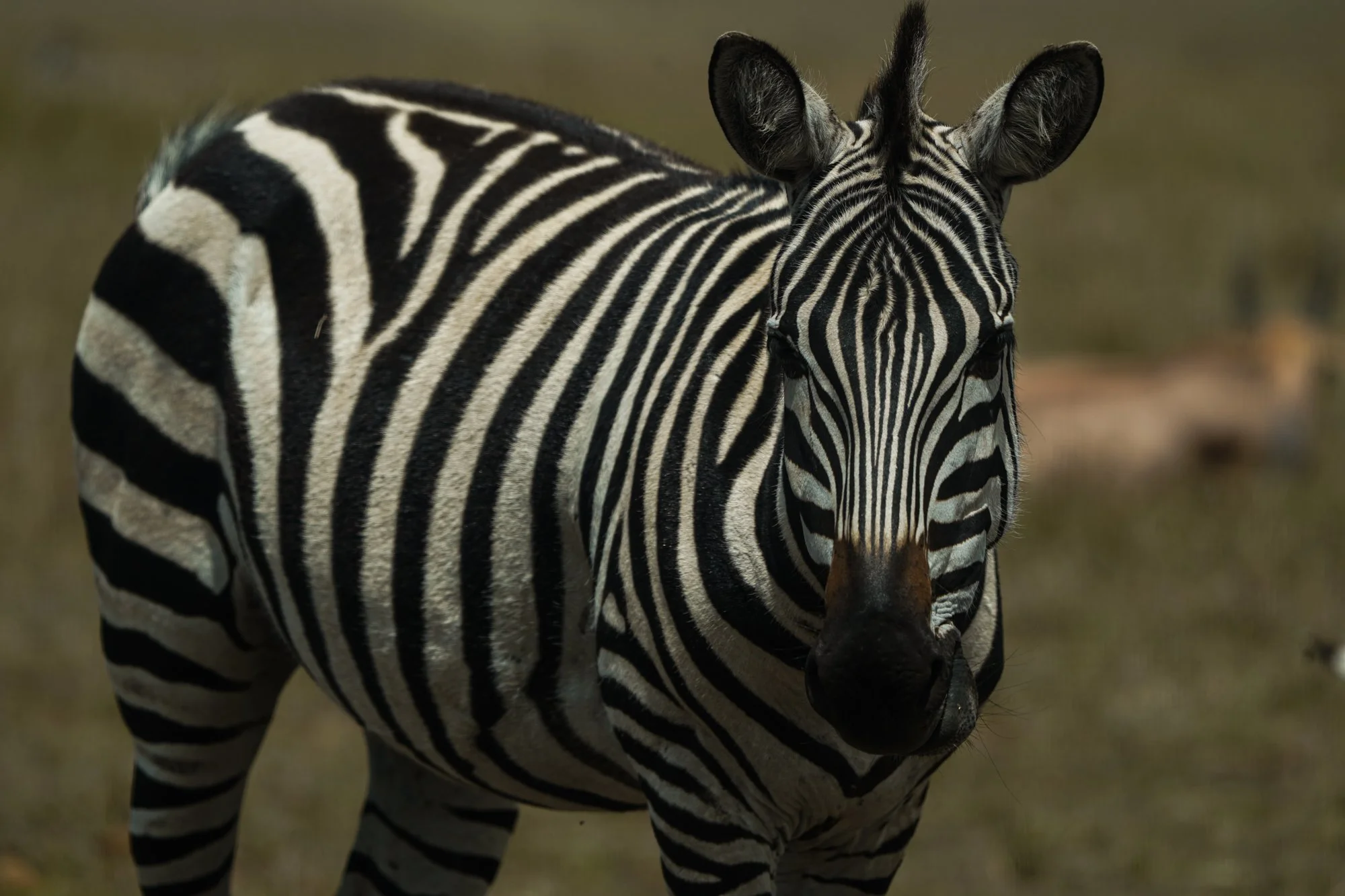
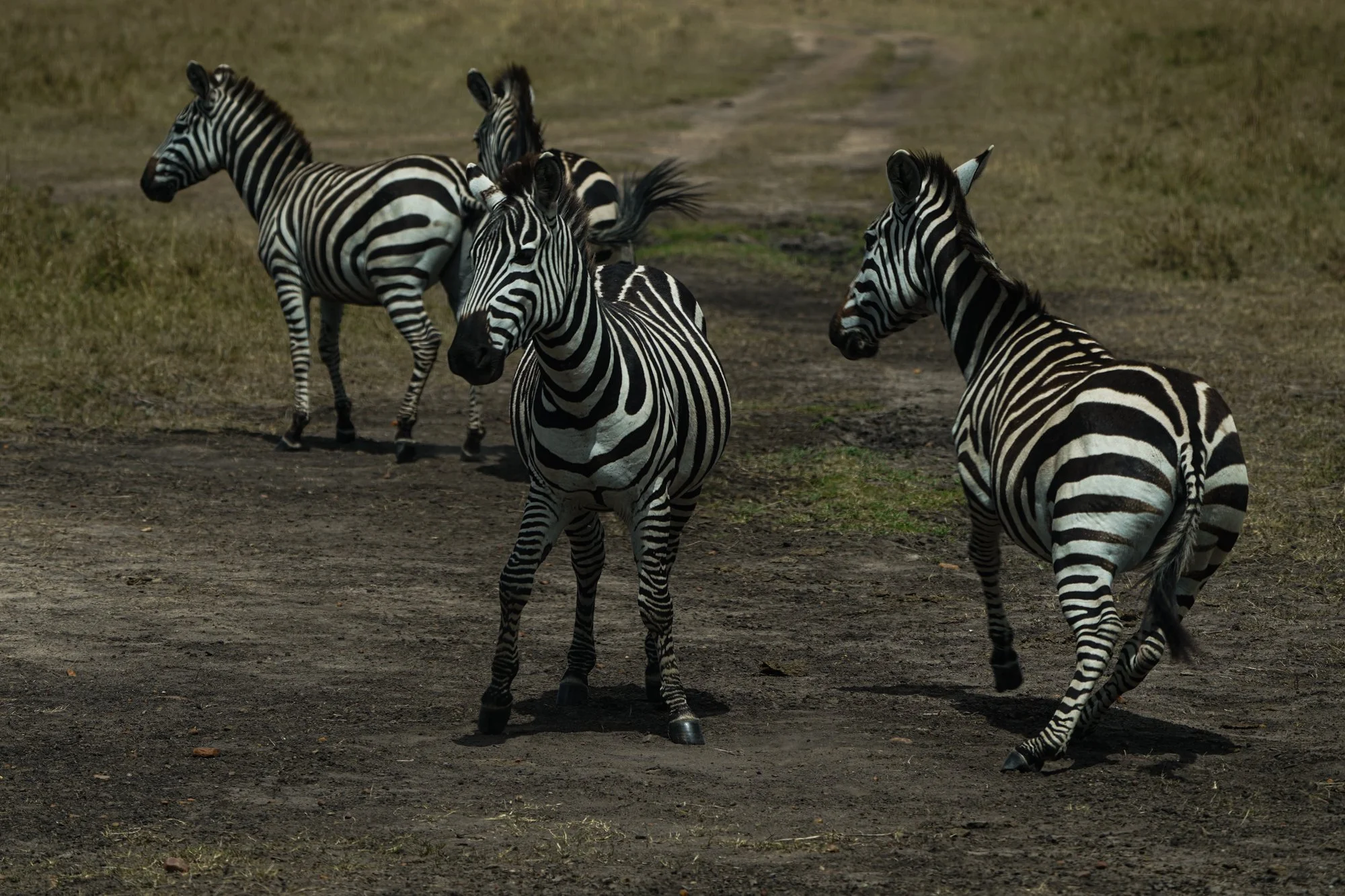
Plains Zebra
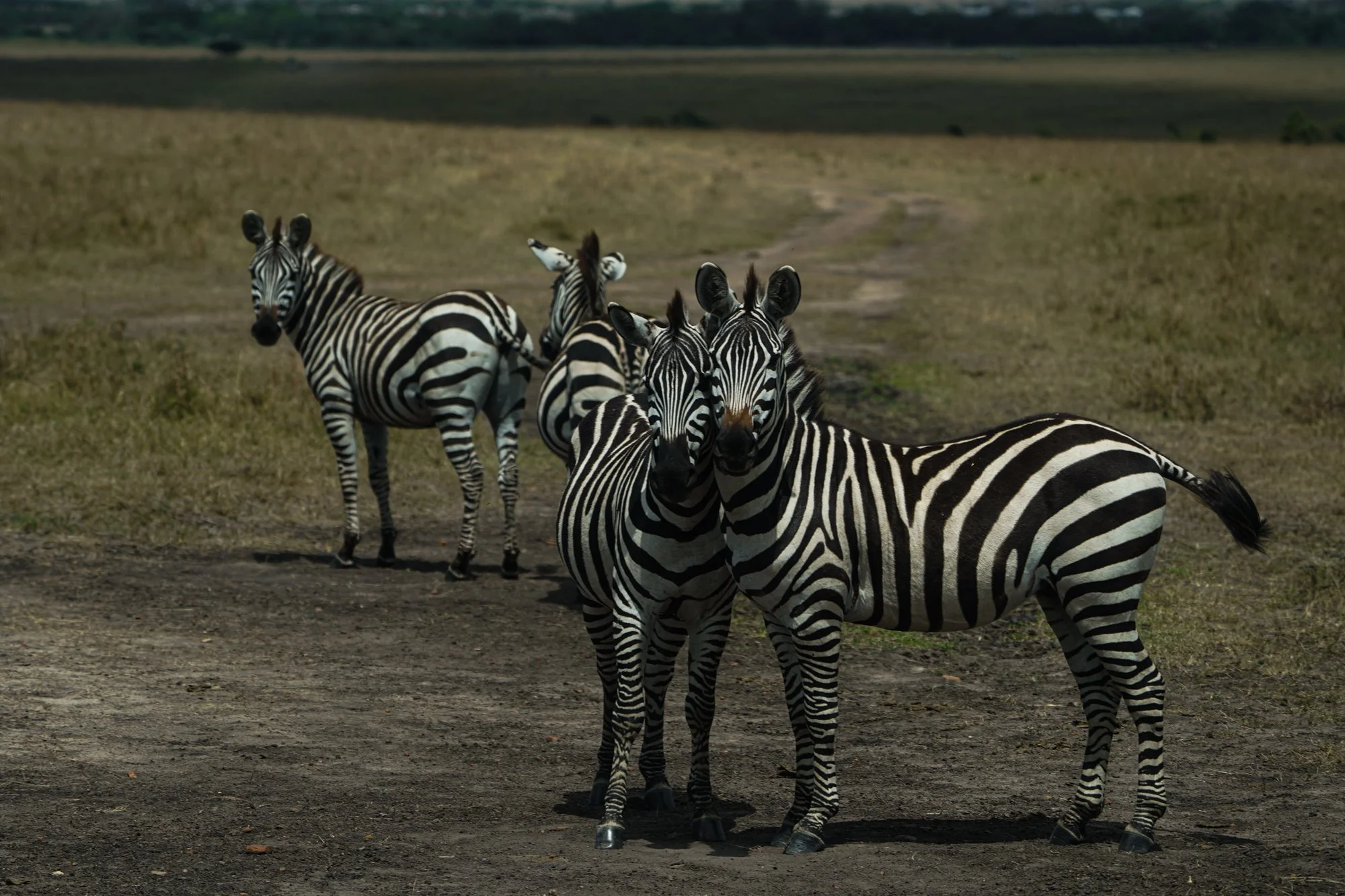
We saw zebras quite freqently, but they never disappointed. They would cross the road in herds, giving us plenty of opportunity to capture them up close.
Topi
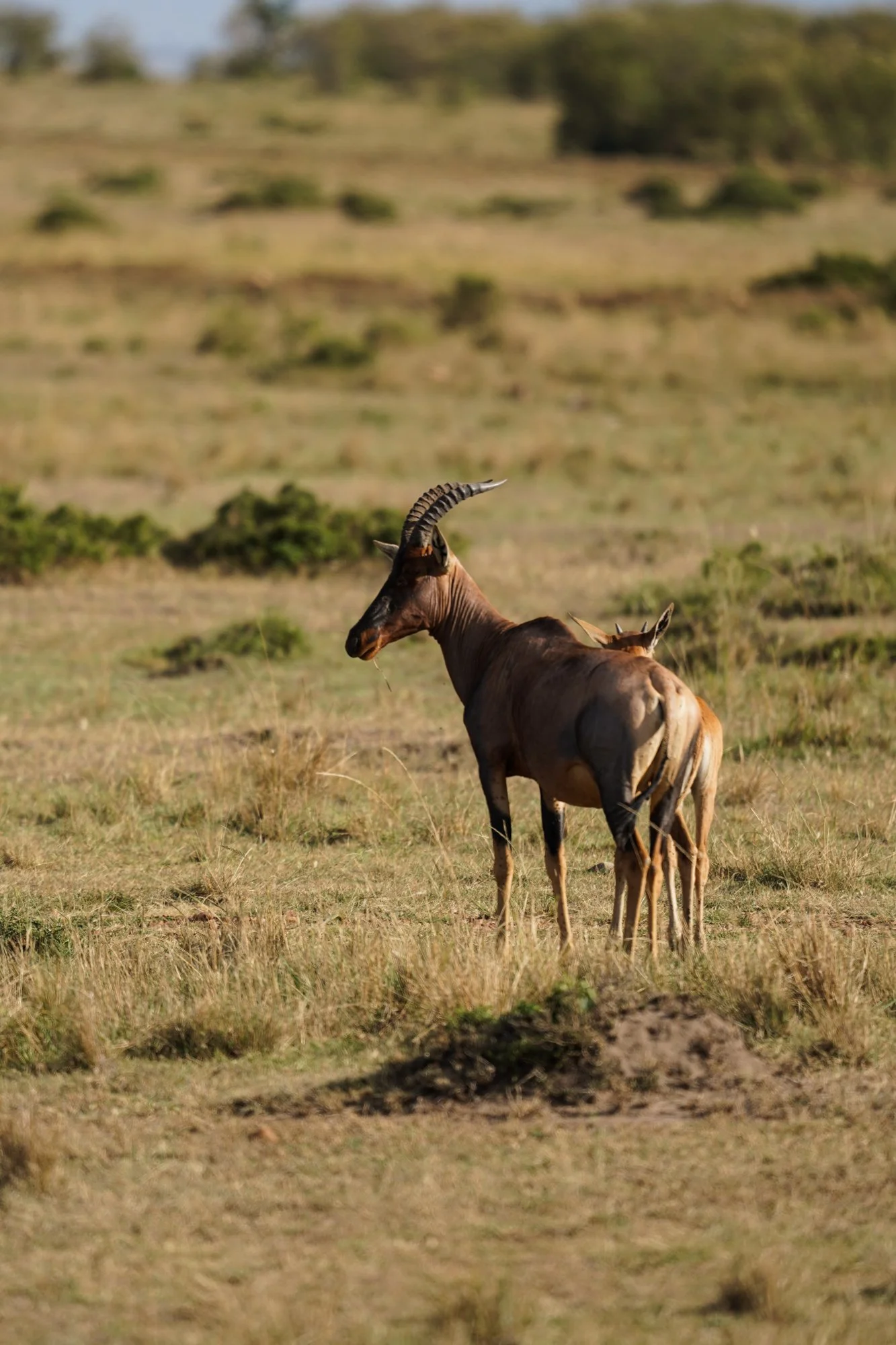
Topis are easy to spot with their rich chocolate coats and muscular stature. You’ll see them standing on termite mounds or scanning the plains, but mostly they appear to mind their business and remain unbothered.
African Lion
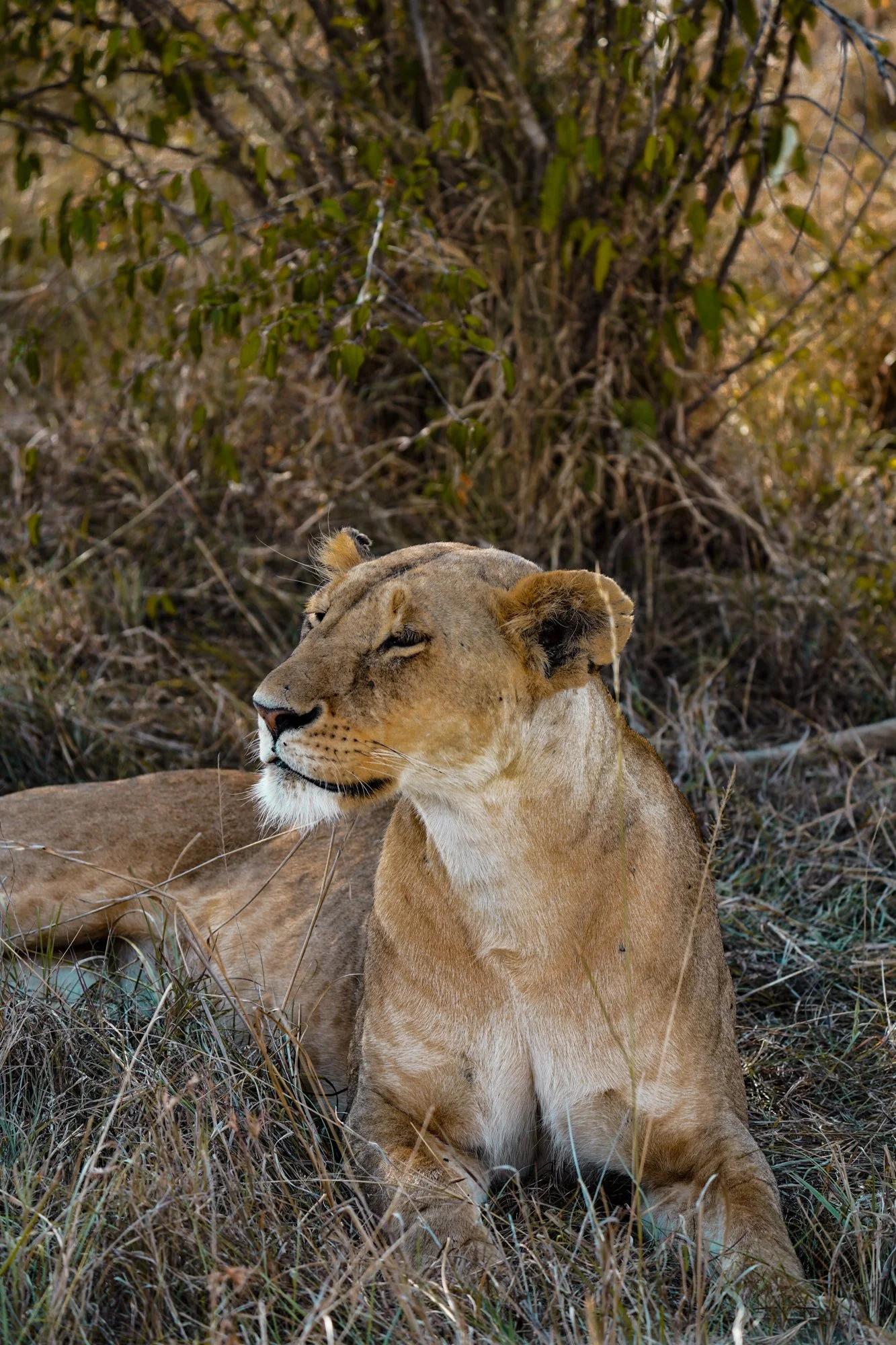
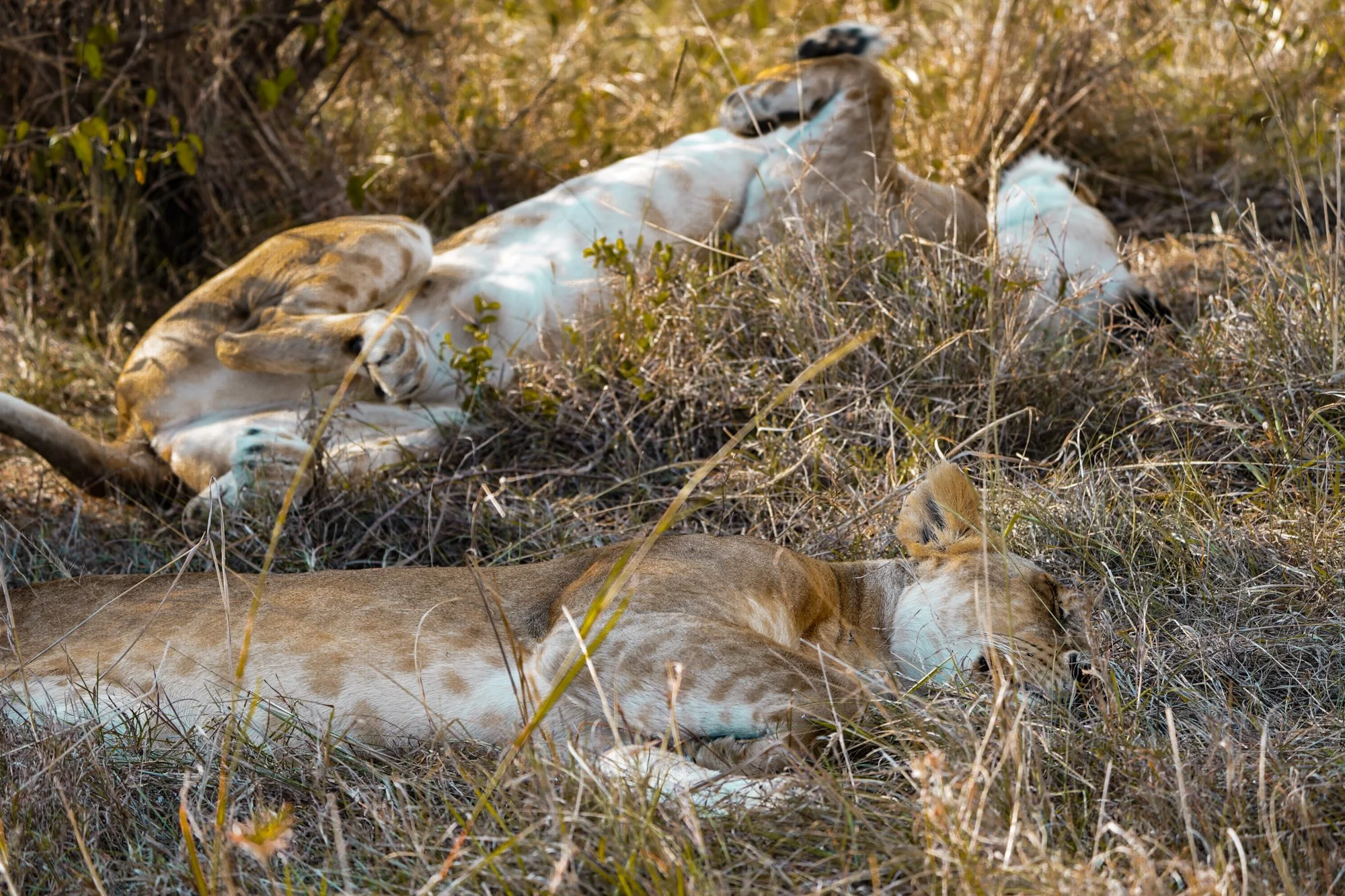
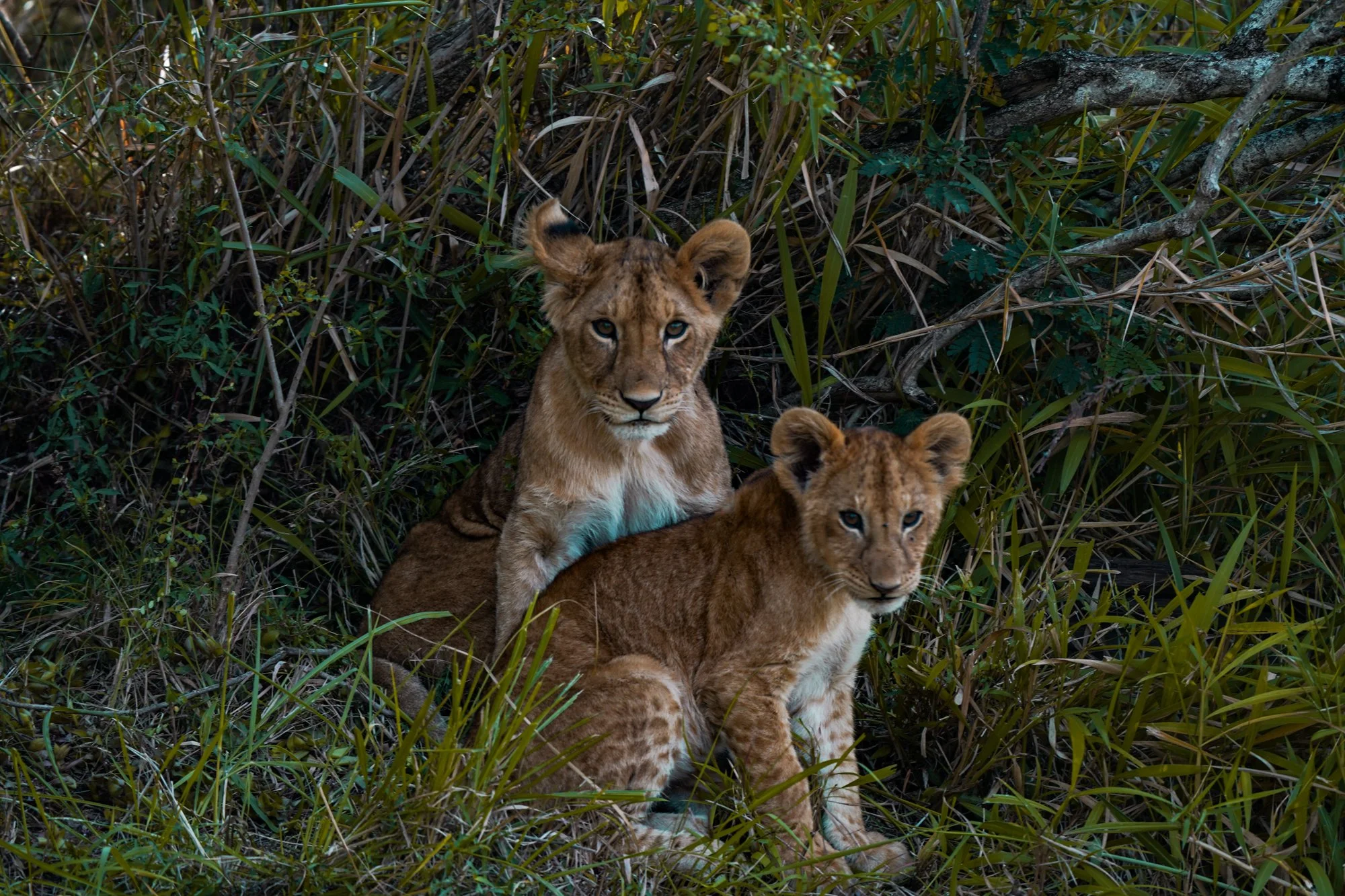
We found a group of lions lounging in the shade of a bush and pretty camouflaged by the wheat colored grass. The beautiful twist was that their cubs, four of them, were hidden about a mile away, and this turned out to be one of the great highlights of the trip. You think you may not see big cats at all and it turns out you see them all with cubs in tow.
Hippos
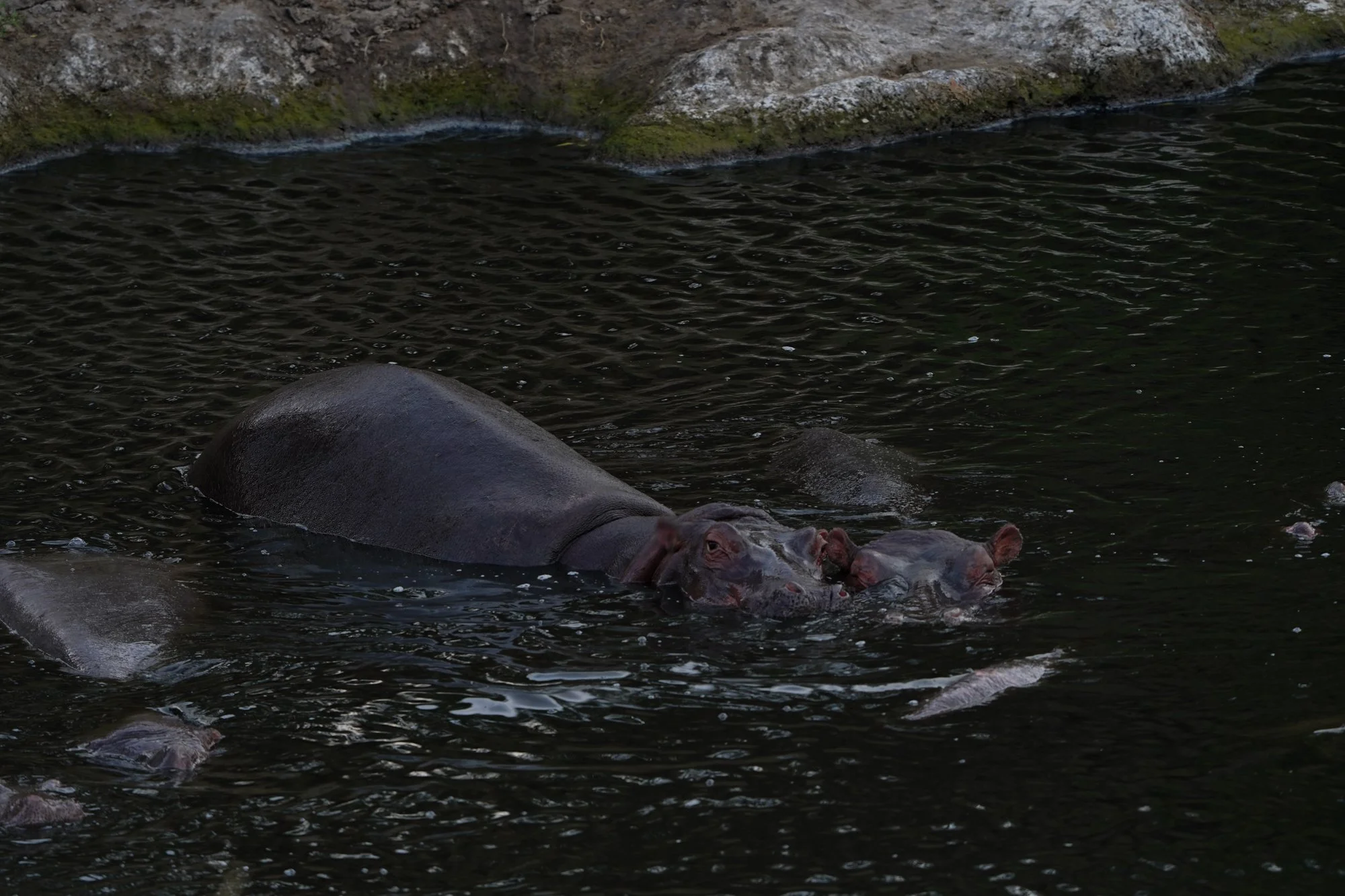
We watched a pod of hippos bob up and down in the water, and as dangerous and downright hateful as they can be, I was surprised to find out how social they are and to capture what looked like a moment of affection between two of them. They spent most of the day submerged, but right at dusk they started rising and moving out of the water, a moment I was truly afraid to stick around too long for.
Masai Giraffes
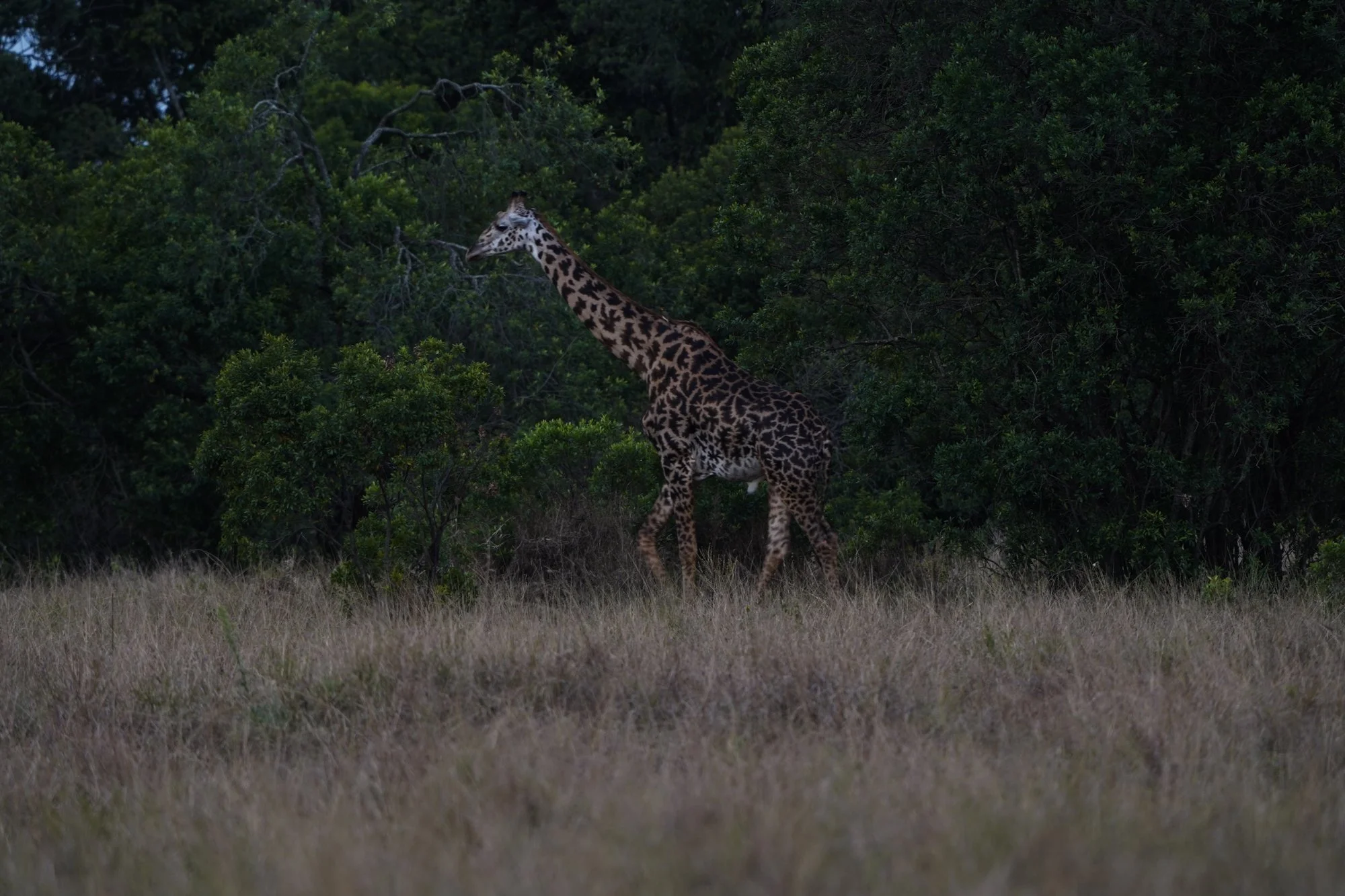
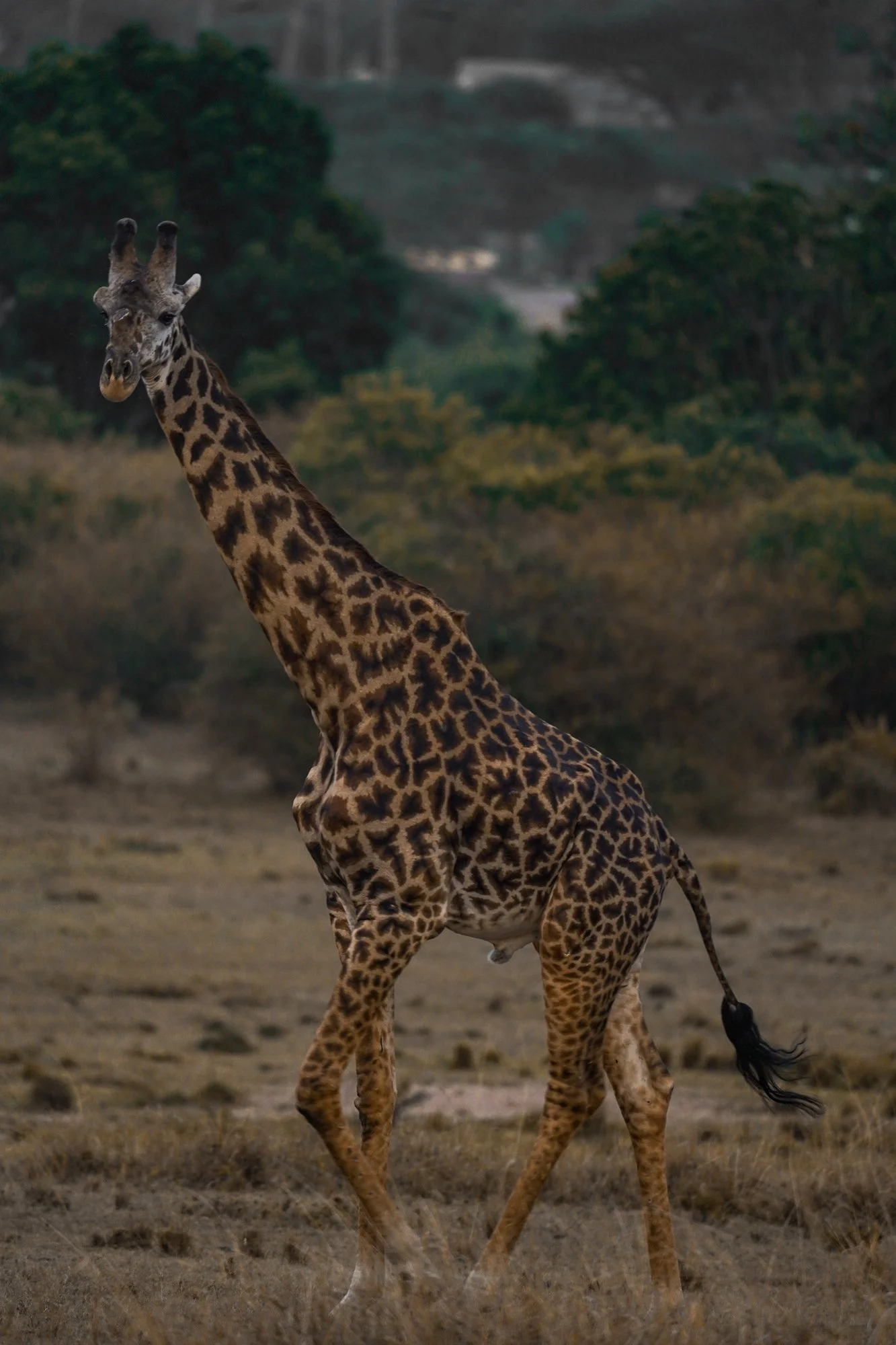
Giraffes are just naturally an unforgettable animal, especially seeing them in groups of six or seven or with babies not far behind. Of all the animals that came strikingly close to the jeep, giraffes may have come the closest, and their height and graceful movement is truly remarkable to see up close.
Elephants
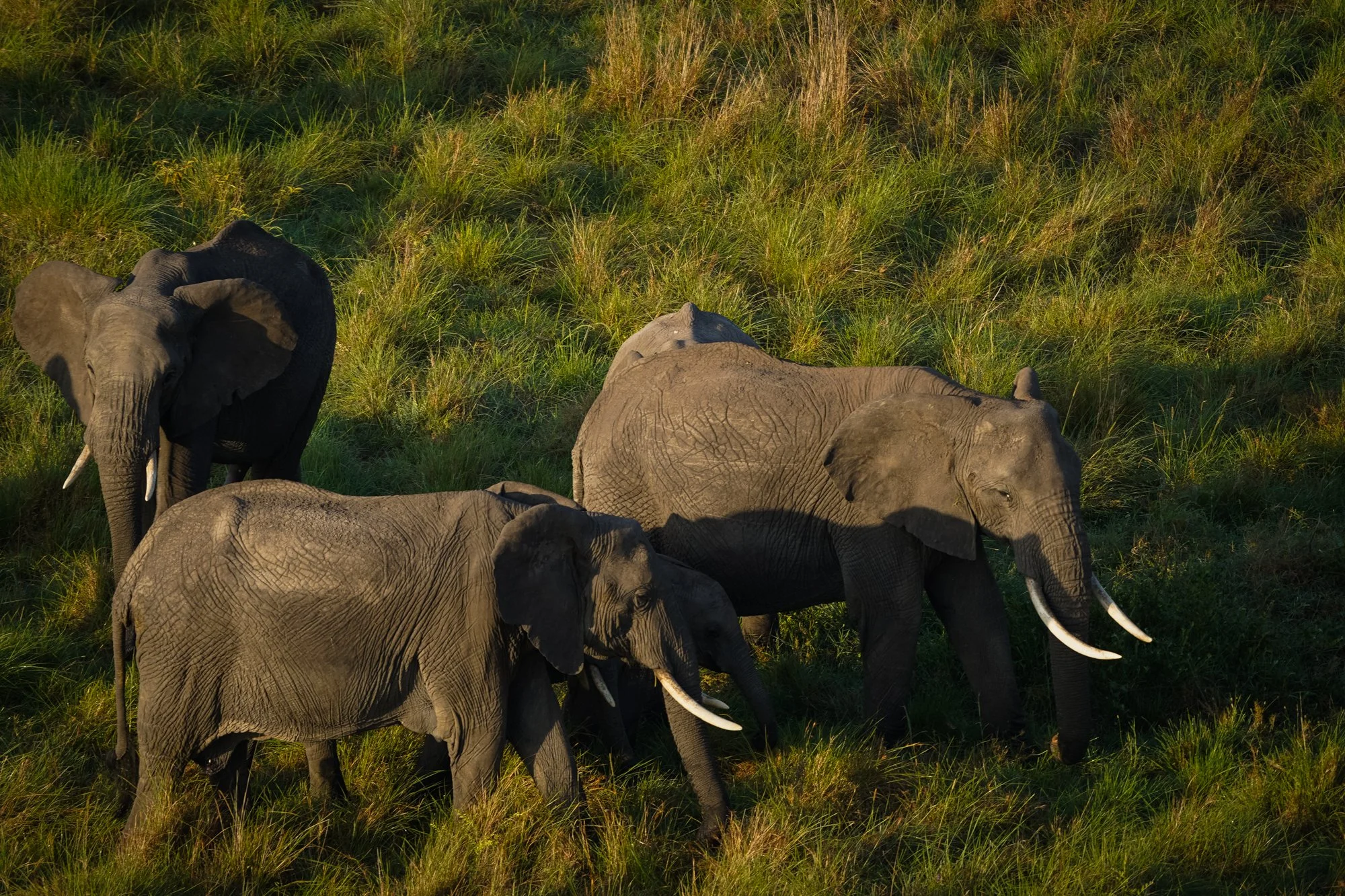
We saw less elephants here than we did in Amboseli, and these were not nearly as close to the road or our vehicles. In fact, this particular shot was taken from a hot air balloon, and there’s a baby in the middle of the circle that you can’t see. They were quite skittish after seeing the hot air balloon and went into protective mode of their little one.
Cape Buffalo
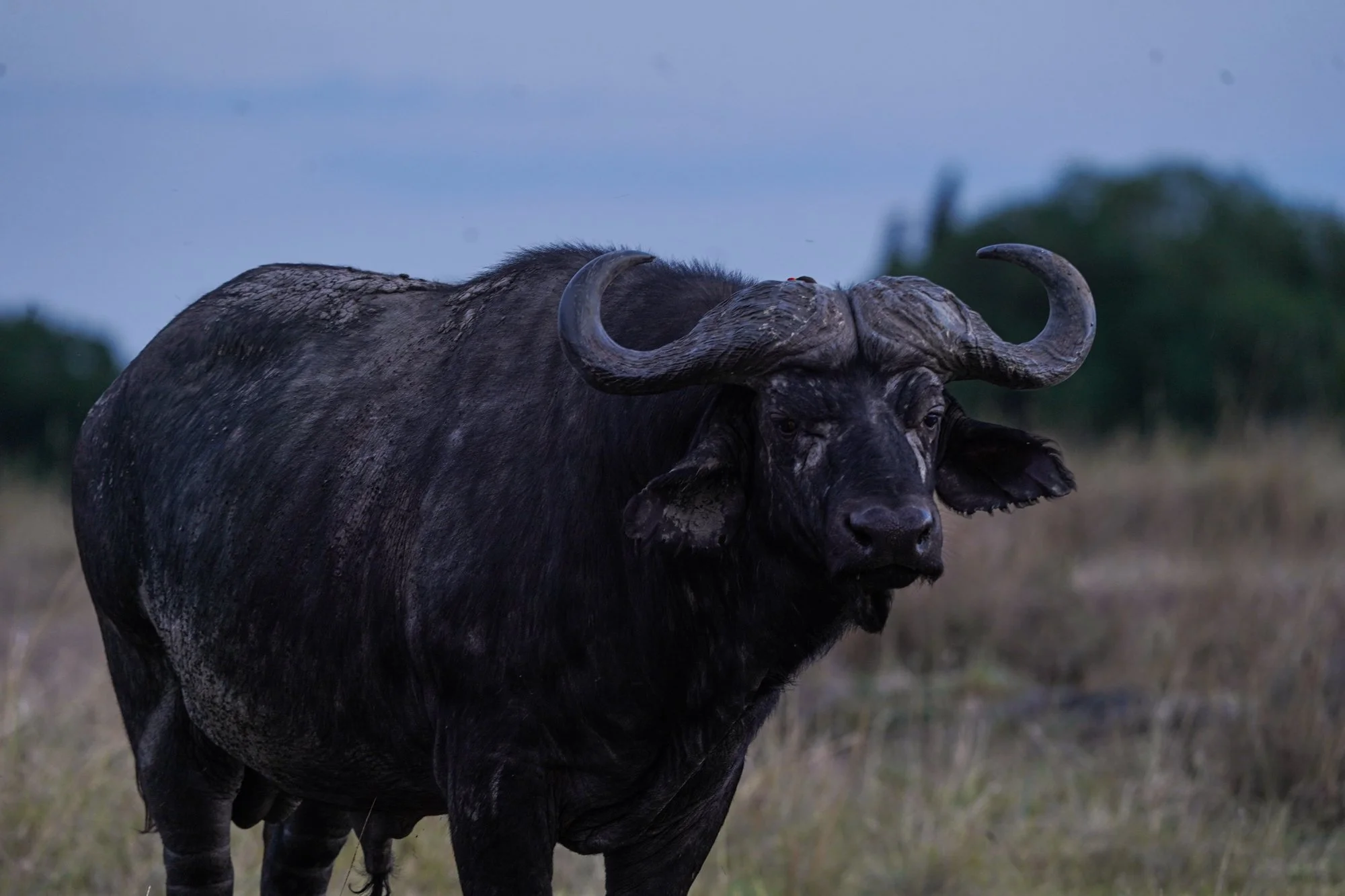
Part of the Big Five, buffalo in the Mara have that same “mind your business” energy as in Amboseli. It wasn’t until we were driving away from them that we learned just how dangerous they are, and looking at this picture, it’s evident they are not to be messed with. Thick horns and heavy shoulders are not particularly inviting, but I was glad for the brief opportunity to capture them so close.
Leopard
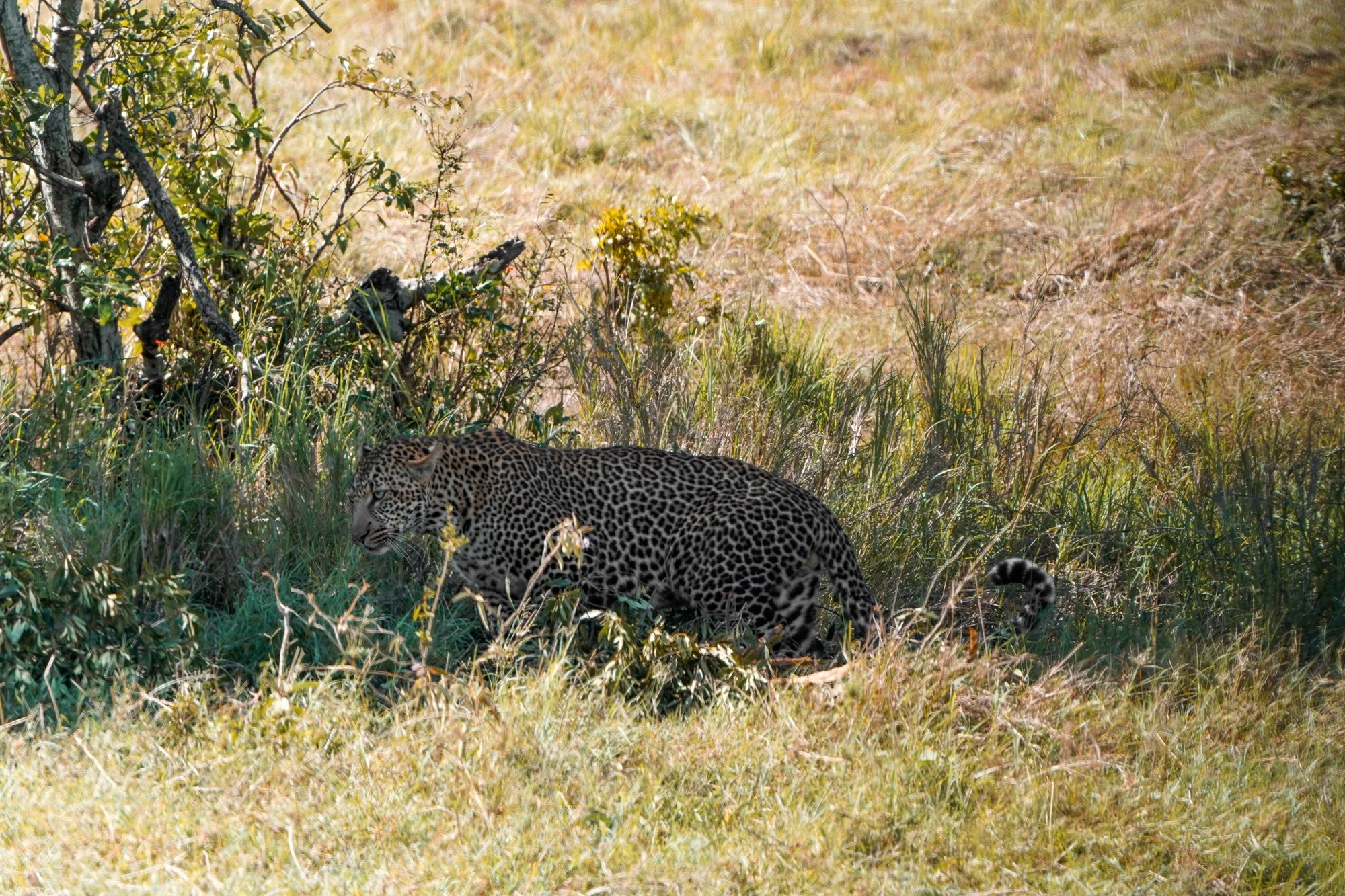
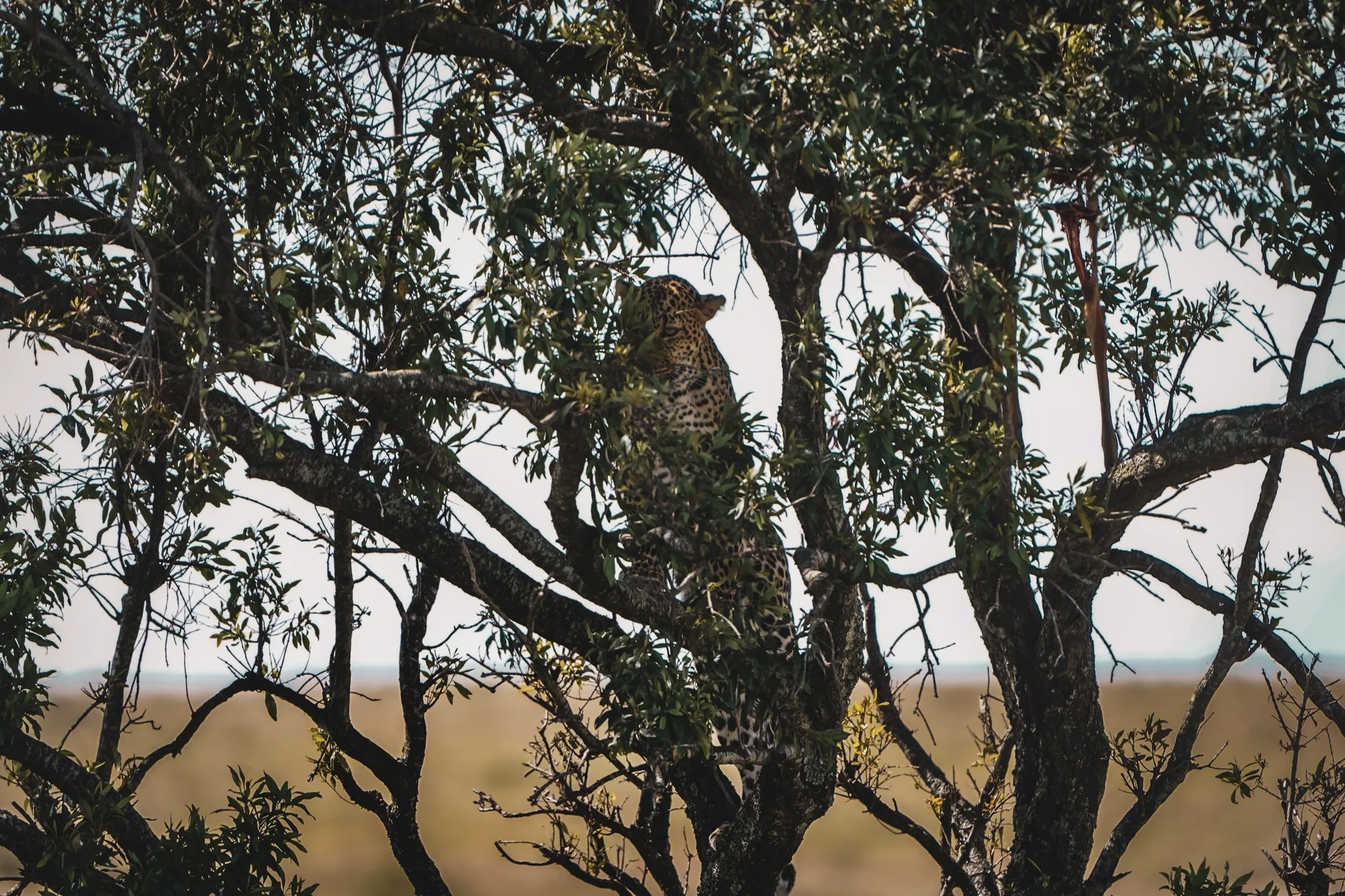
Leopards are elusive everywhere, but the Mara gifted us two, a mother on the ground and a cub perched in the tree eating the remains of a meal. At one point, we witnessed a hyena unceremoniously trying to steal the kill, but the leopard hardly gave it the time of day, so we didn’t see as much action as we were hoping for.
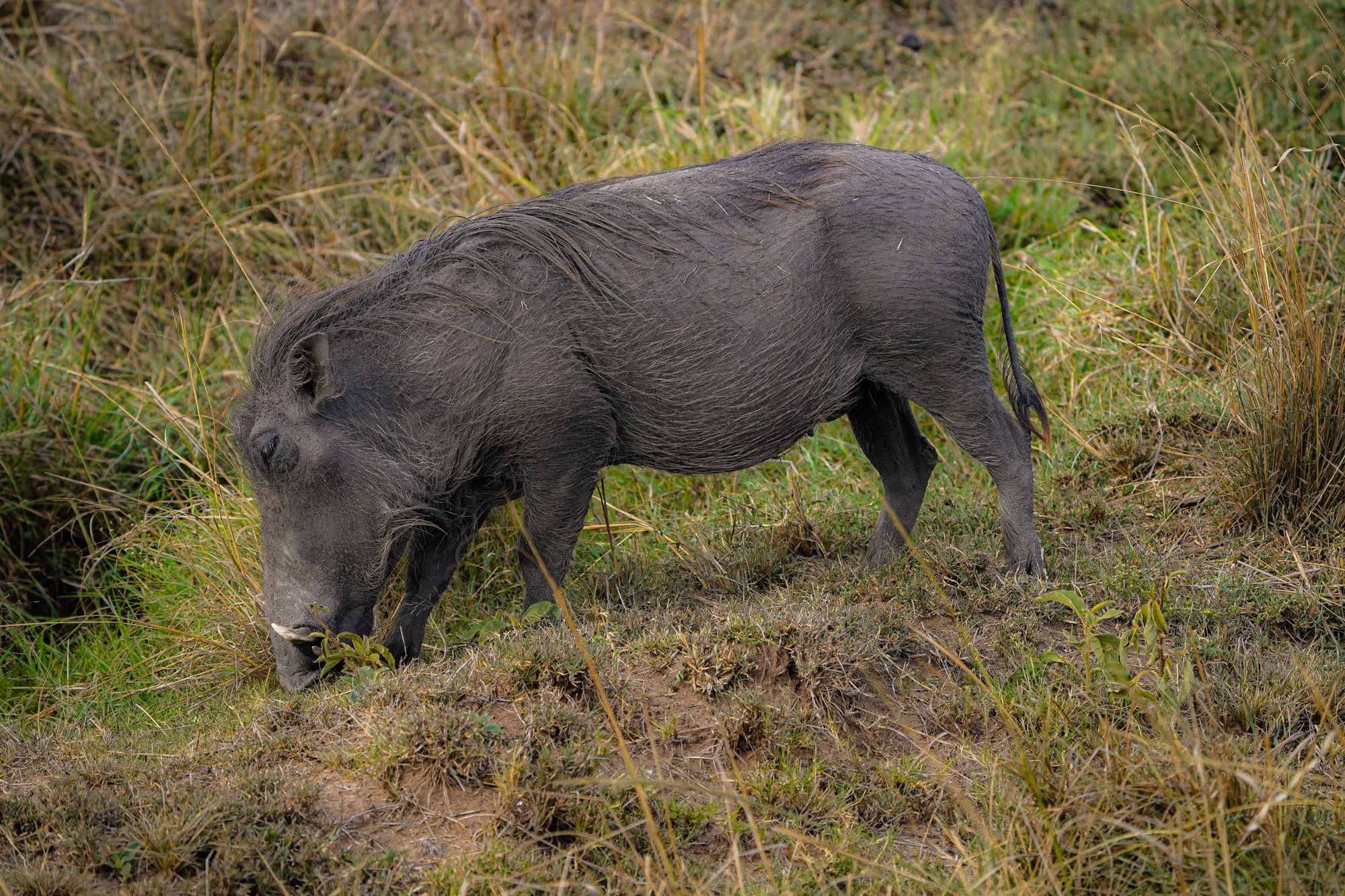
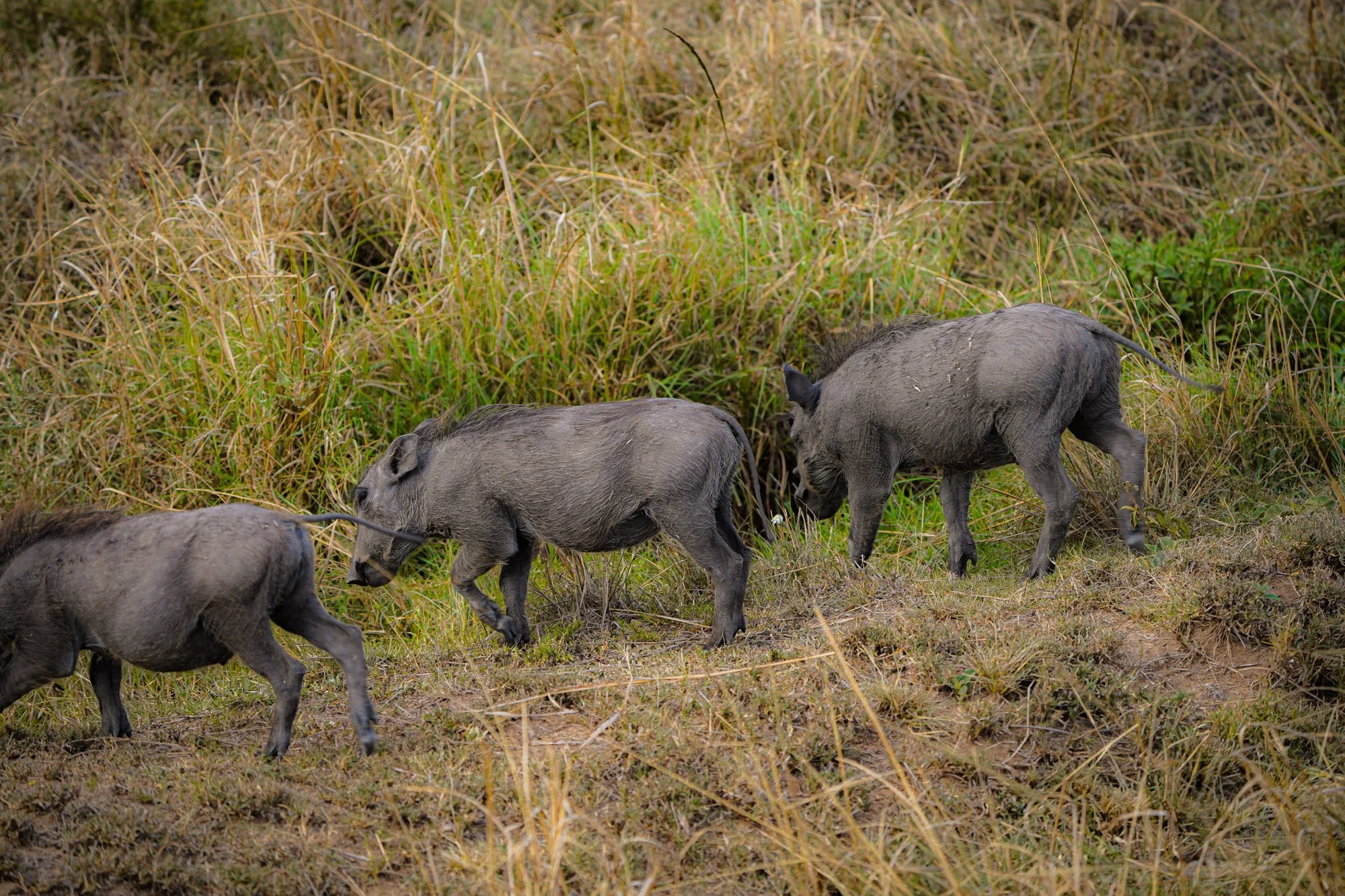
Warthogs “Pumbas”
Every single warthog family we saw came with a set of four babies, and I don’t find warthogs to be particularly cute animals, but the babies were adorable. They trot behind their parents in perfect formation, and their playfulness and roughhousing was pretty funny to witness.
Impala
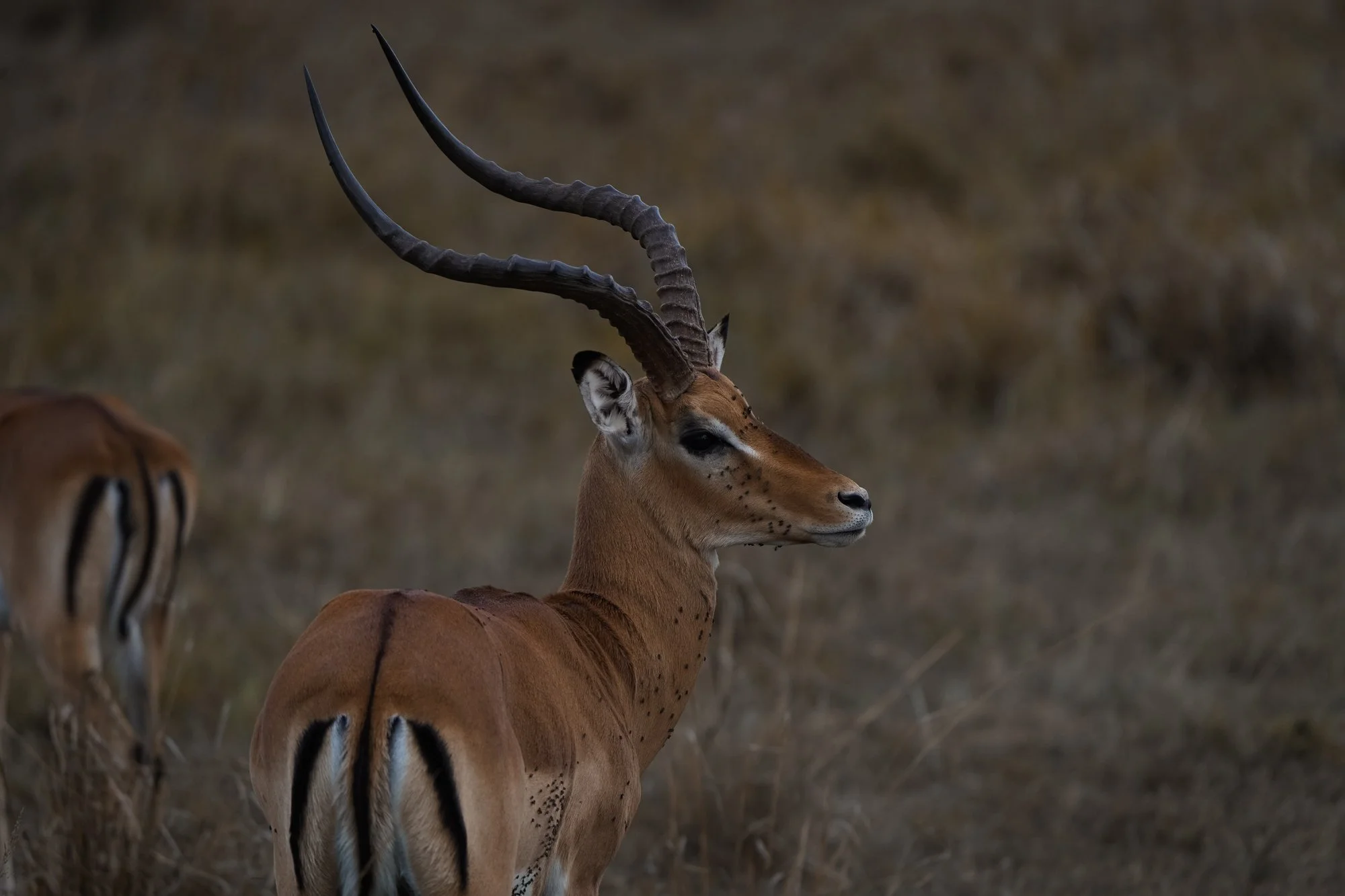
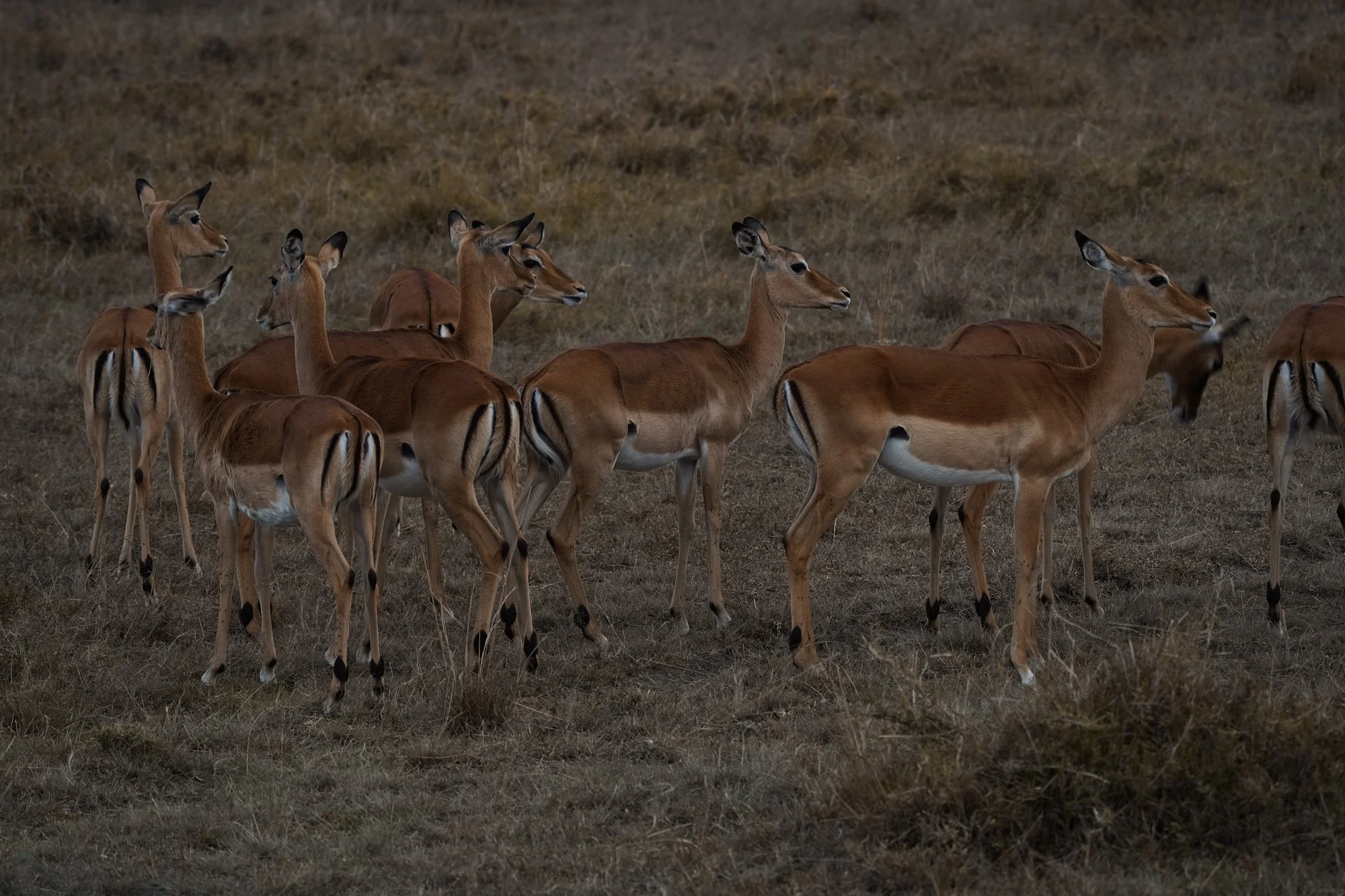
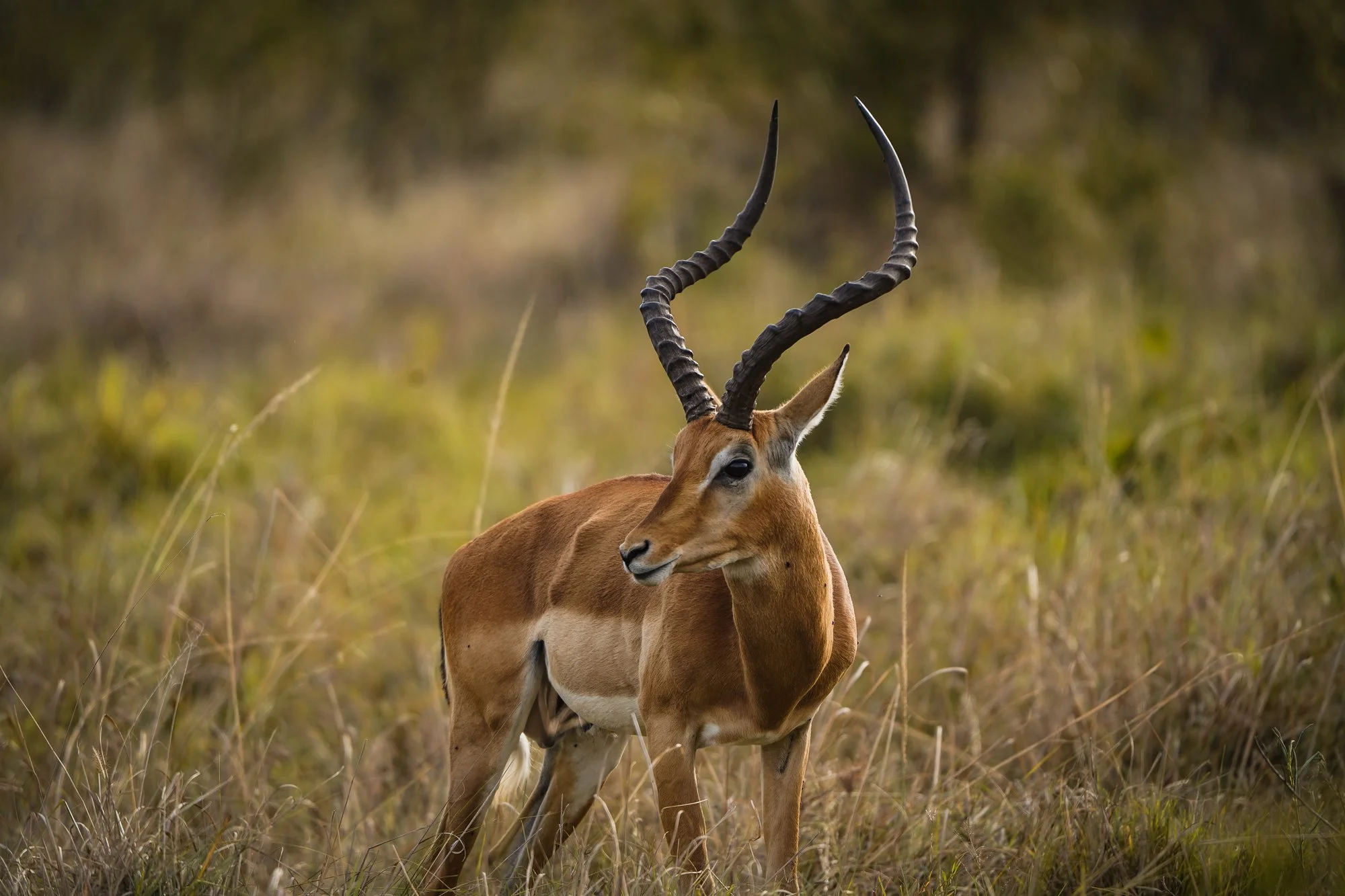
Impalas travel in groups, and their reddish coats glow in the sunlight, making for some beautiful photos. Any time we saw them, there was a troupe of females with a male casanova right in the center attempting to make a move.
Hyena
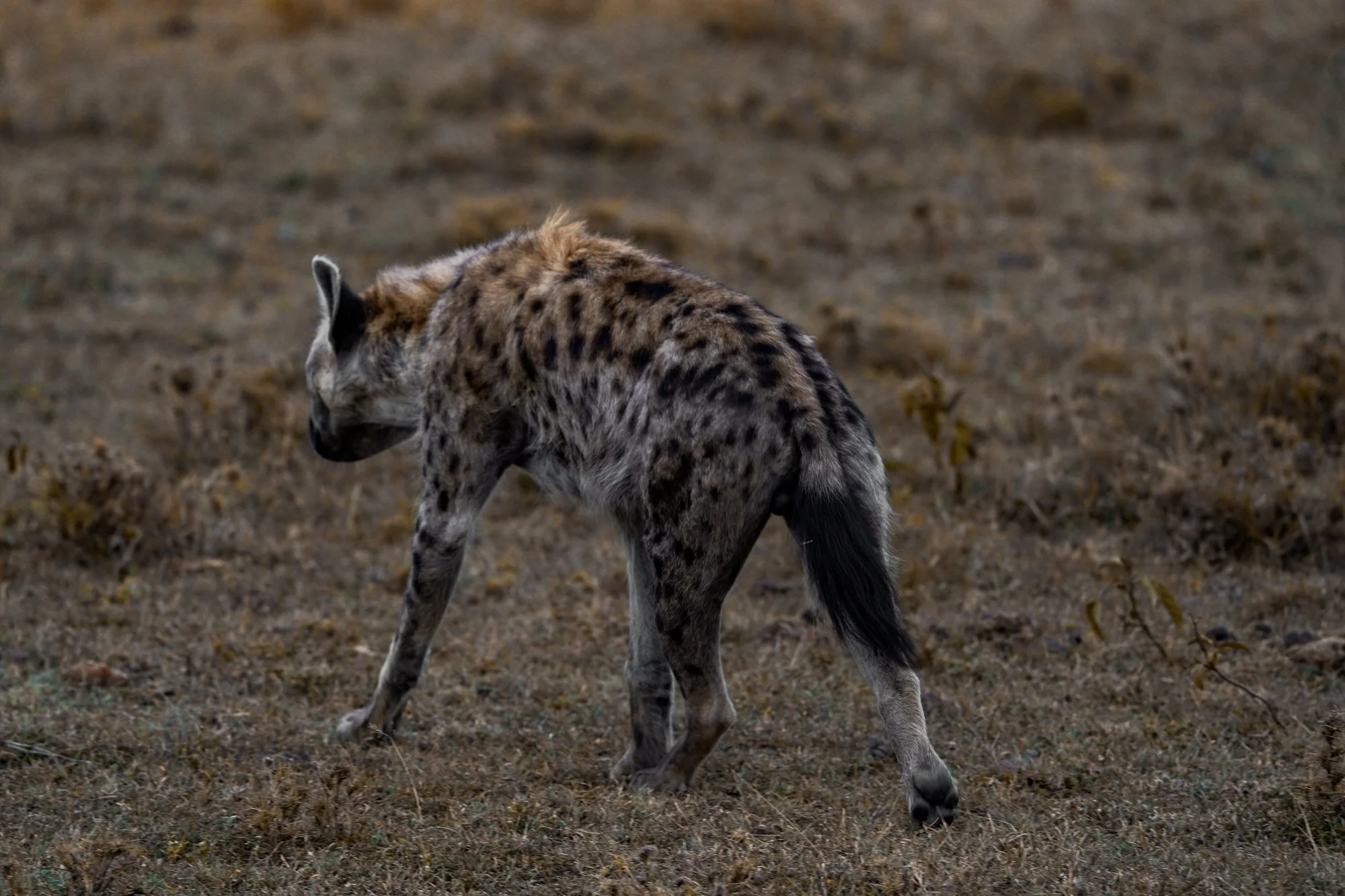
As I mentioned, we watched one of these bad boys actively trying to steal the leopard’s food, circling, inching closer, testing its luck. They’re a bit messy, but they’re bold, and I think you have to respect that in the wild.
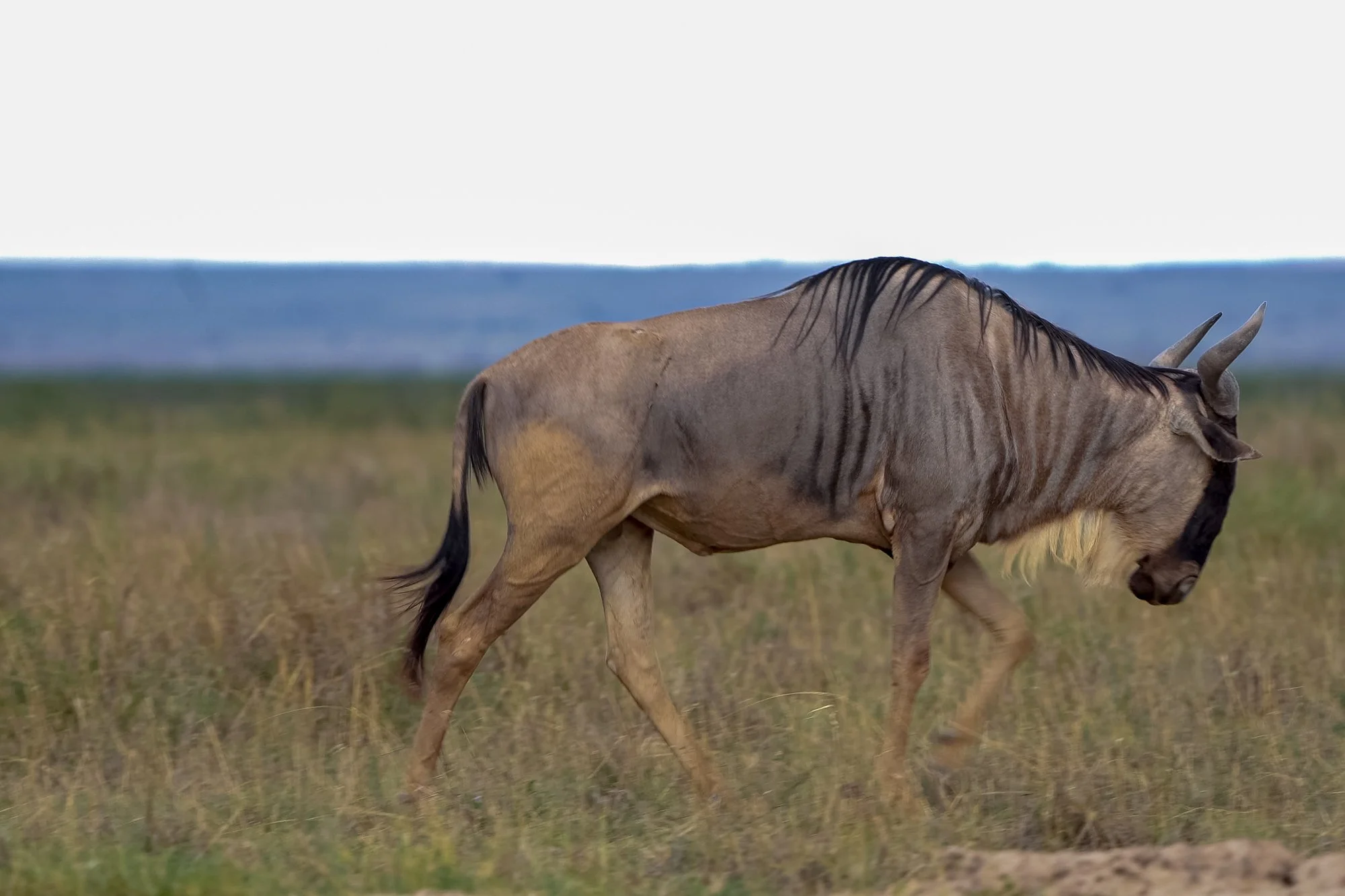
Wildebeest/Gnu
Wildebeest move mostly in herds, but we did see a handful of them solo throughout the plains. They’re scruffy, strong, and always on the move with their bearded faces and sloping backs. They’re known for their constant migrations and dramatic river crossings. Even when they’re just grazing, they sort of look like they’re thinking about their next journey, and that’s probably because they are.
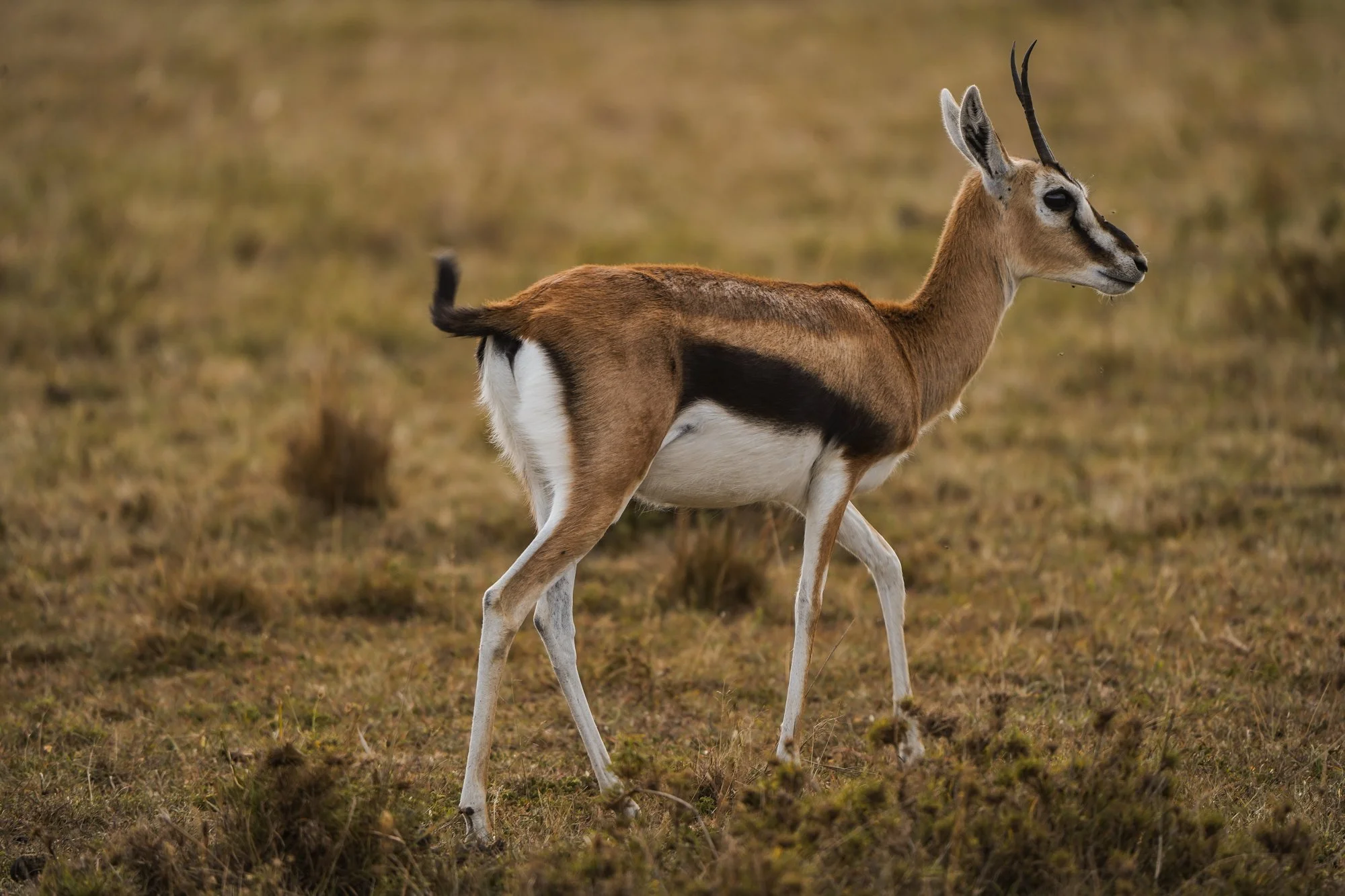
Thomson’s Gazelles
The “Tommies” were everywhere mostly grazing and sometimes sprinting. Their black side stripe is unmistakable, and they’re often the first and last animals you see in the park just because of the sheer number of them.
Animals Commonly Seen in Maasai Mara
Maasai Mara has one of the most diverse wildlife populations in the world. Other animals you might spot that I did not see include:
Jackals
Bat-eared foxes
Servals
Crocodiles
Ostriches
Black rhinos (rare but present)
During the Great Migration (July–October), the Mara becomes the stage for millions of wildebeest and zebras crossing from Tanzania, one of Earth’s greatest natural events, and one that is unfortunately being impeded by human activity currently.
Why the Maasai Mara Is Truly One of a Kind
The Mara feels alive in a way that’s hard to describe, and there’s so much excitement of not knowing what you’ll see next but you know and trust that it will be truly magical and unforgettable.
You come here for the wildlife, but witnessing these animals’ instincts and behaviors up close gives you a new understanding of what “the wild” really means. If Amboseli is gentle and grounded, then Maasai Mara is powerful, cinematic, and vivid, and it’s the kind of safari experience that stays in your memory long after you’ve returned home.
Watch the Video
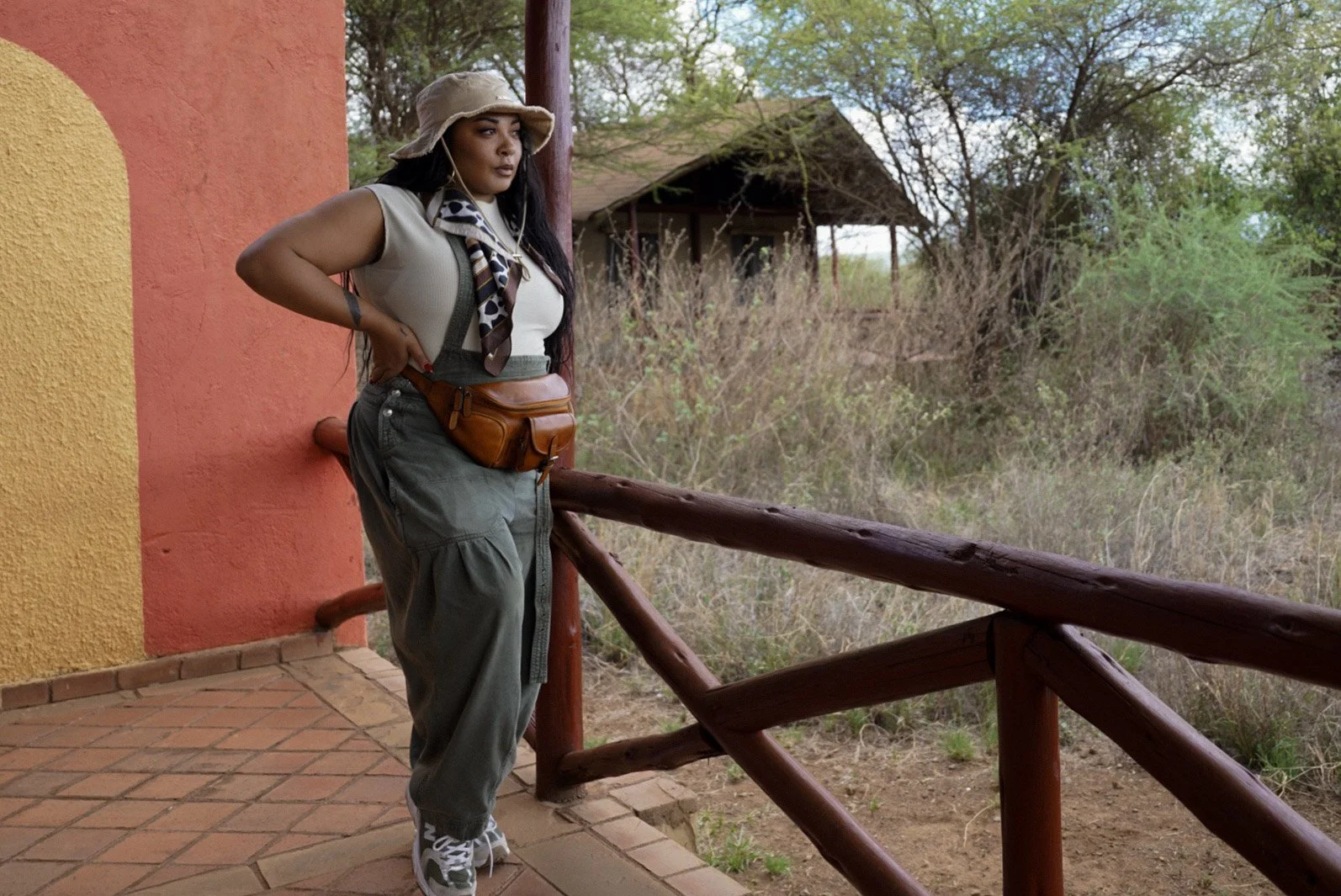
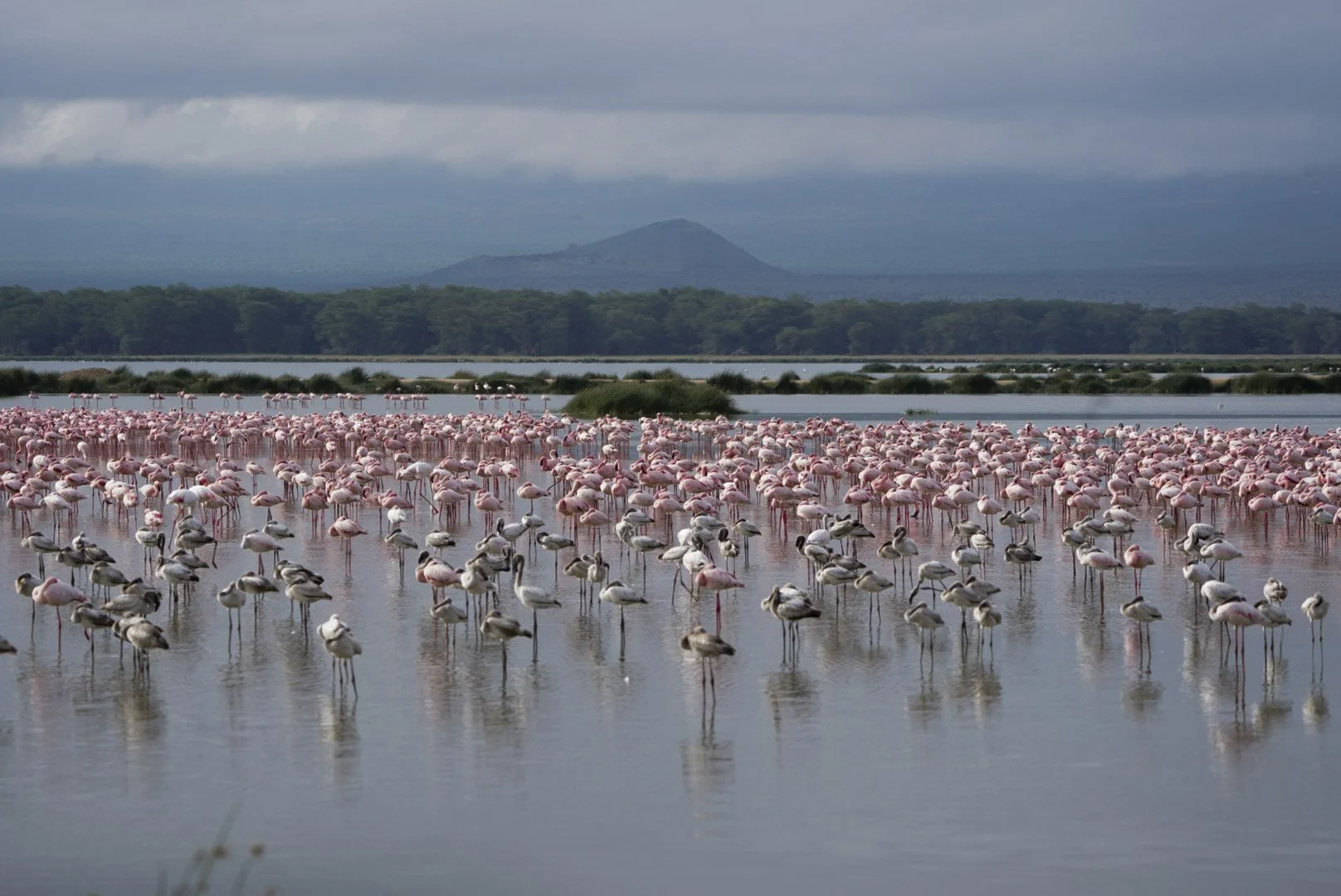

Everyone tells you to book a Kenya safari between June and October. I went in November instead and spent two weeks across the Maasai Mara, Amboseli, and the Great Rift Valley Lake System. It rained exactly twice, both times overnight. What I got instead was green landscapes, thinner crowds, and newborn wildlife everywhere I looked.